




- Monday 9:00 a.m - 5:00 p.m
- Tuesday 9:00 a.m - 5:00 p.m
- Wednesday 9:00 a.m - 5:00 p.m
- Thursday 9:00 a.m - 5:00 p.m
- Friday 9:00 a.m - 5:00 p.m
- Saturday 10:00 a.m - 2:00 p.m
- Sunday Closed



ID # 29716348
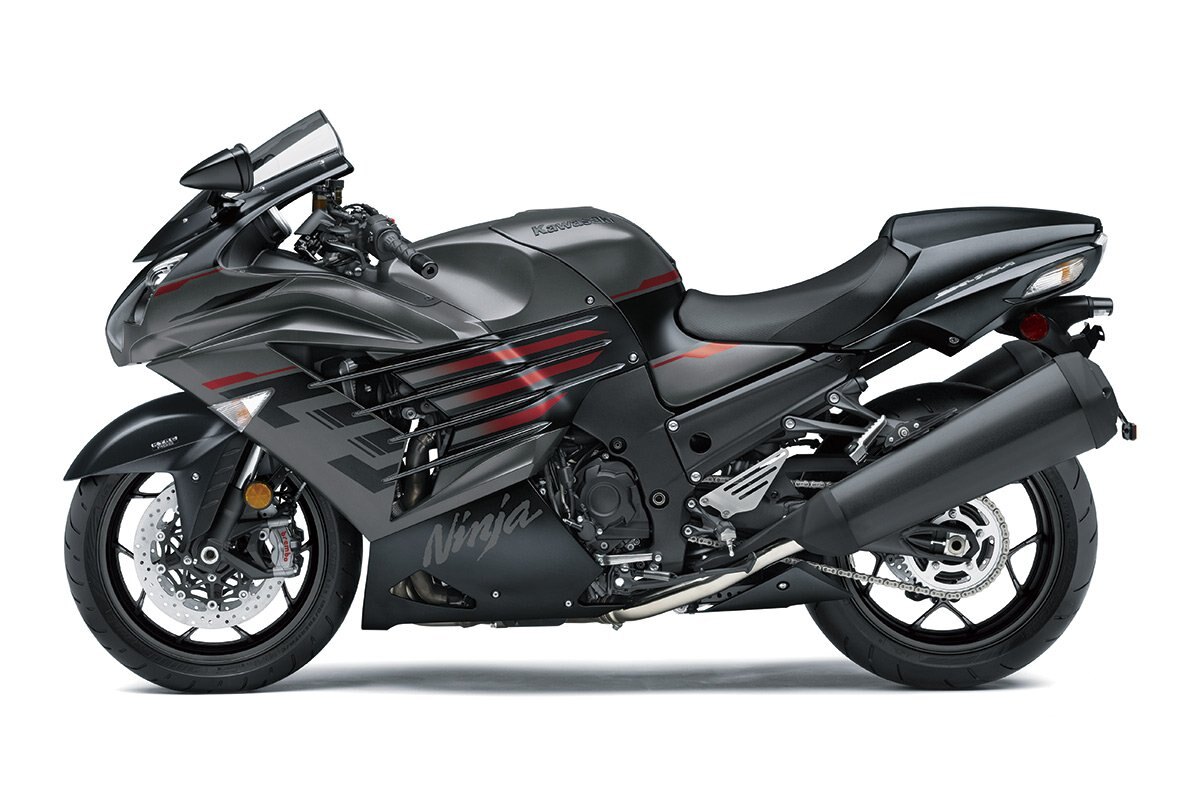
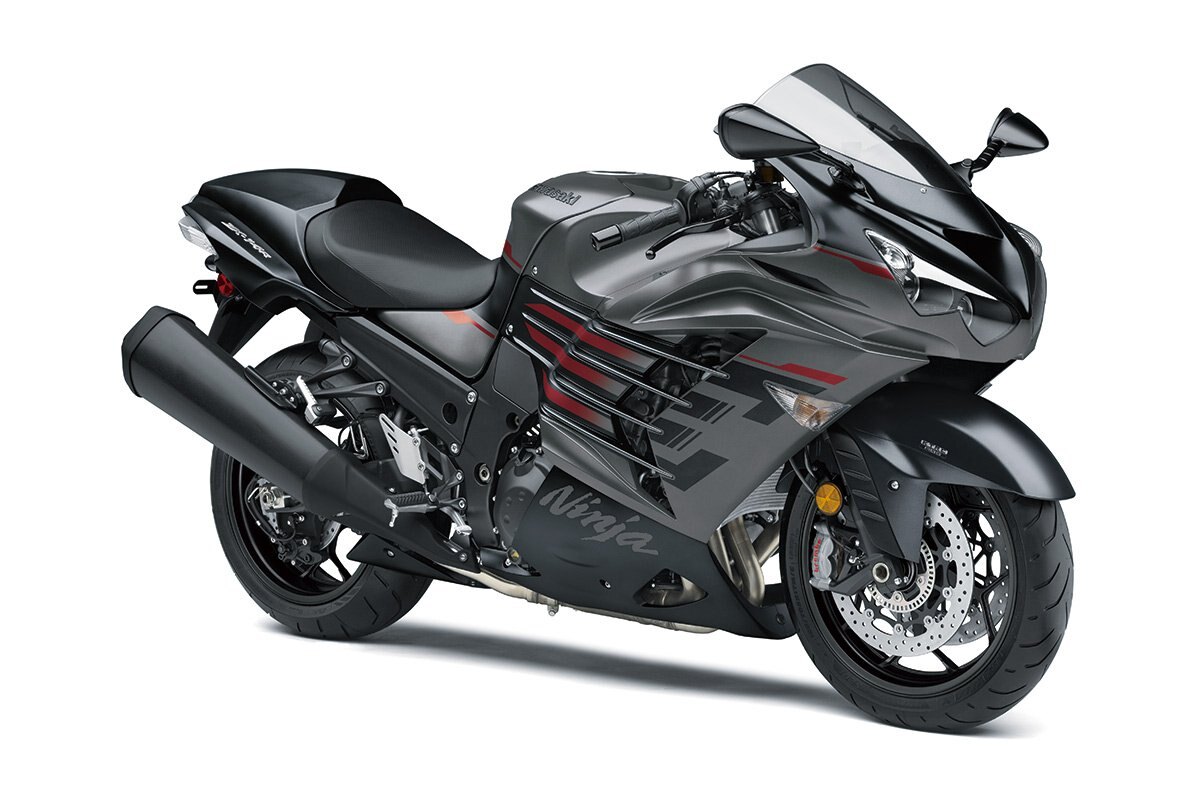
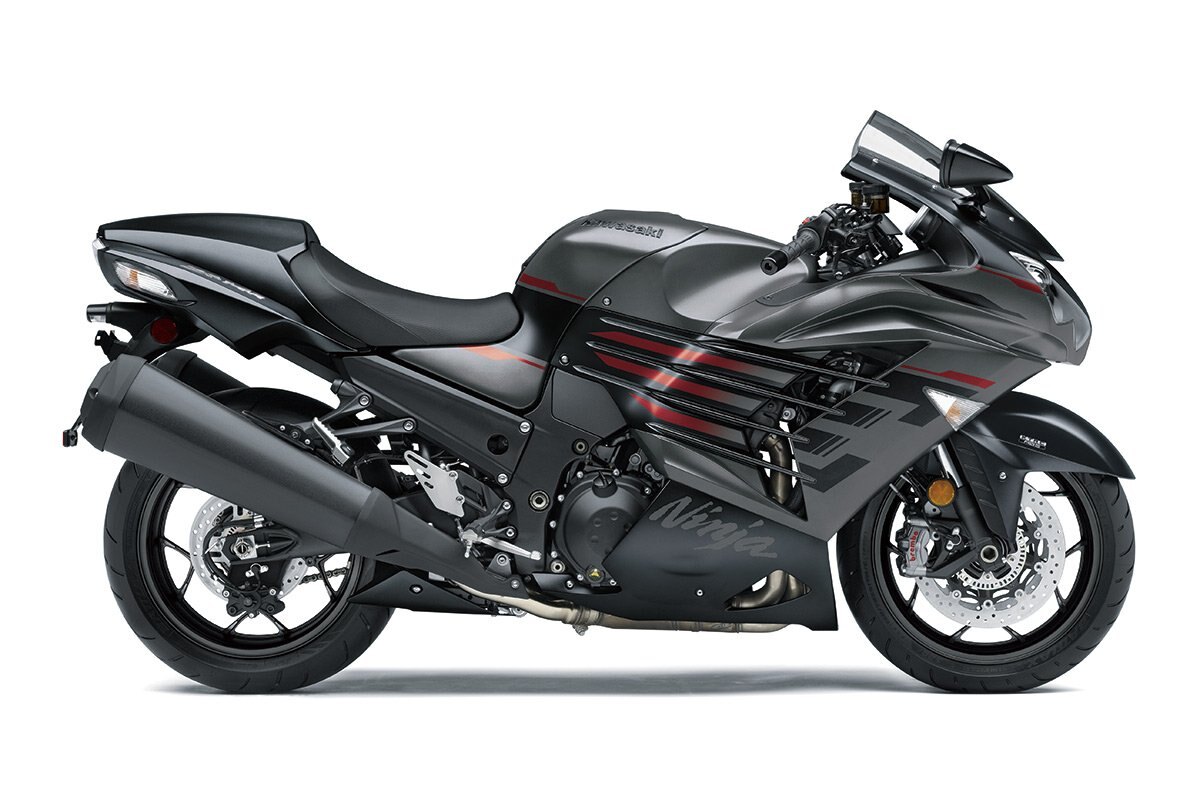
2023 Kawasaki NINJA ZX-14R
Call for Price
Overview
Specifications
technology
power
performance
details
top features
|
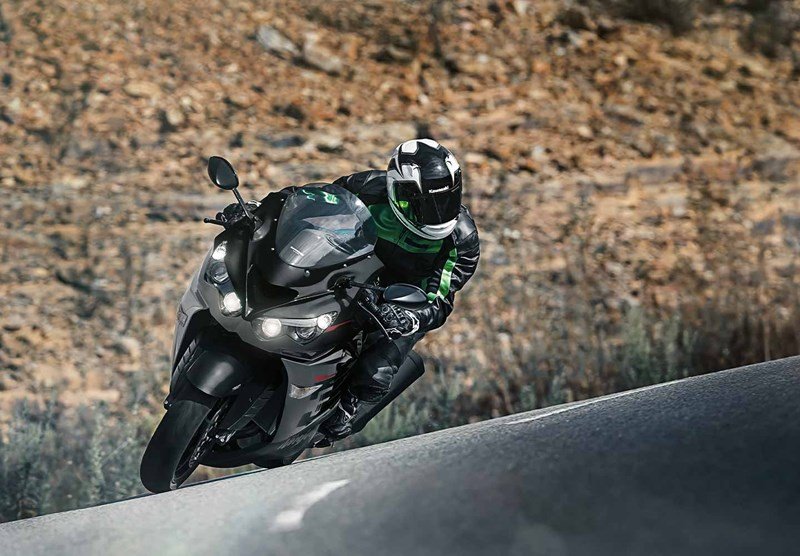
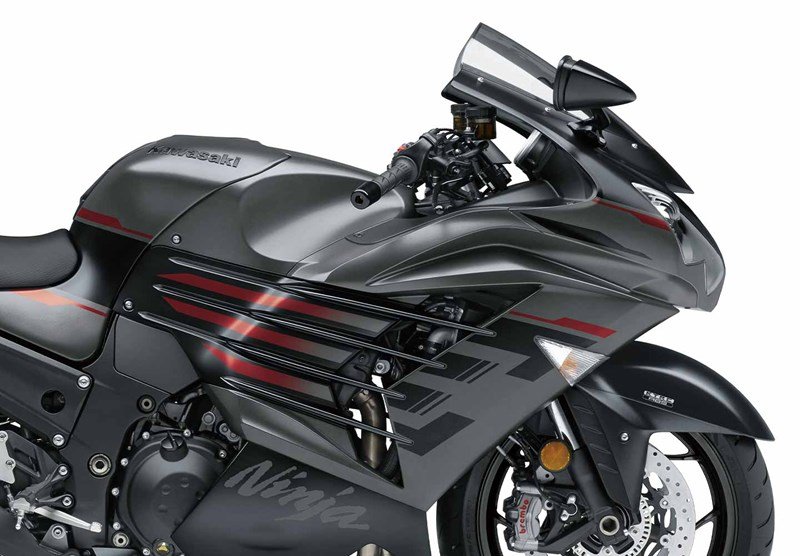
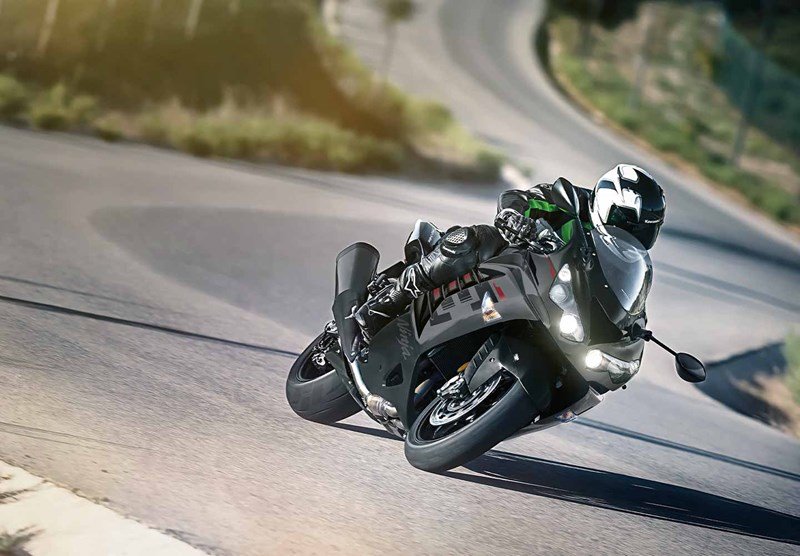
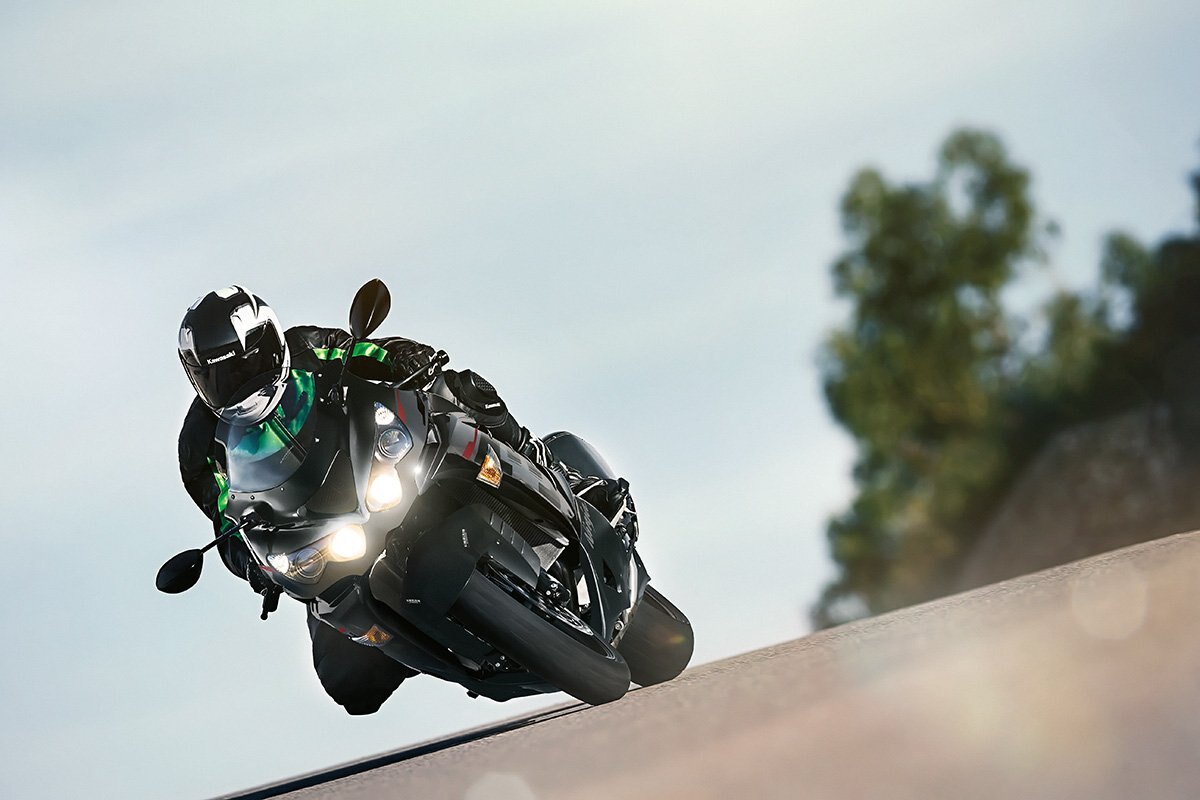
Renowned for its dominance at the drag strip, the mighty Kawasaki Ninja ZX-14R is King of the Quarter Mile. An enormous 1,441cc engine, premium onboard electronics and uncompromising refinement give the Ninja ZX-14R the ability to take on the track or the backroads with sophisticated ease. |
FEATURING
|
ADDITIONAL VEHICLE FEATURES
|
Model
NINJA
Category Name
Motorcycles
Year
2023
Sale Type
New
Manufacturer
Kawasaki
Color
METALLIC MATTE GRAPHENE STEEL GRAY / FLAT EBONY
Engine Size
1,441cc
Technology
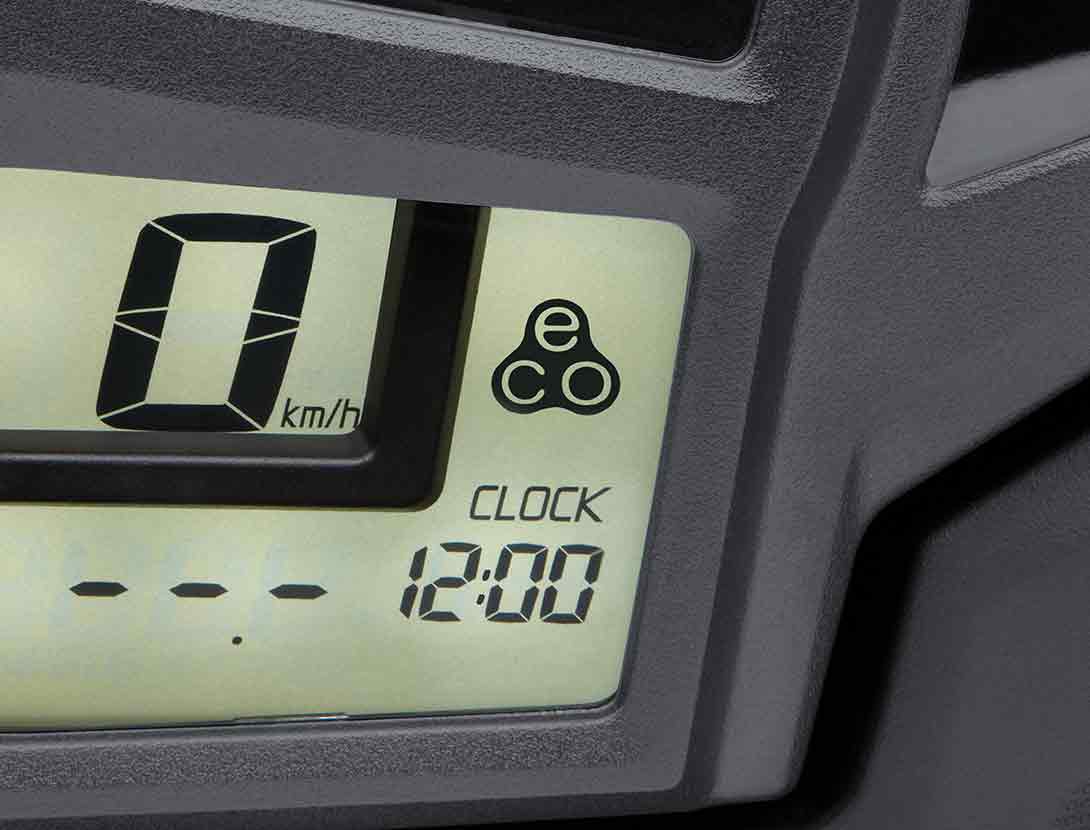
ECONOMICAL RIDING INDICATOR
Using high-precision electronic control for engine management, Kawasaki models can achieve a high level of fuel efficiency. However, fuel consumption is greatly affected by throttle use, gear selection, and other elements under the rider's control. The Economical Riding Indicator is a function that indicates when current riding conditions are consuming a low amount of fuel. The system continuously monitors fuel consumption, regardless of vehicle speed, engine speed, throttle position and other riding conditions. When fuel consumption is low for a given speed (i.e. fuel efficiency is high), an "ECO" mark appears on the instrument panel's LCD screen. By riding so that the "ECO" mark remains on, fuel consumption can be reduced. |
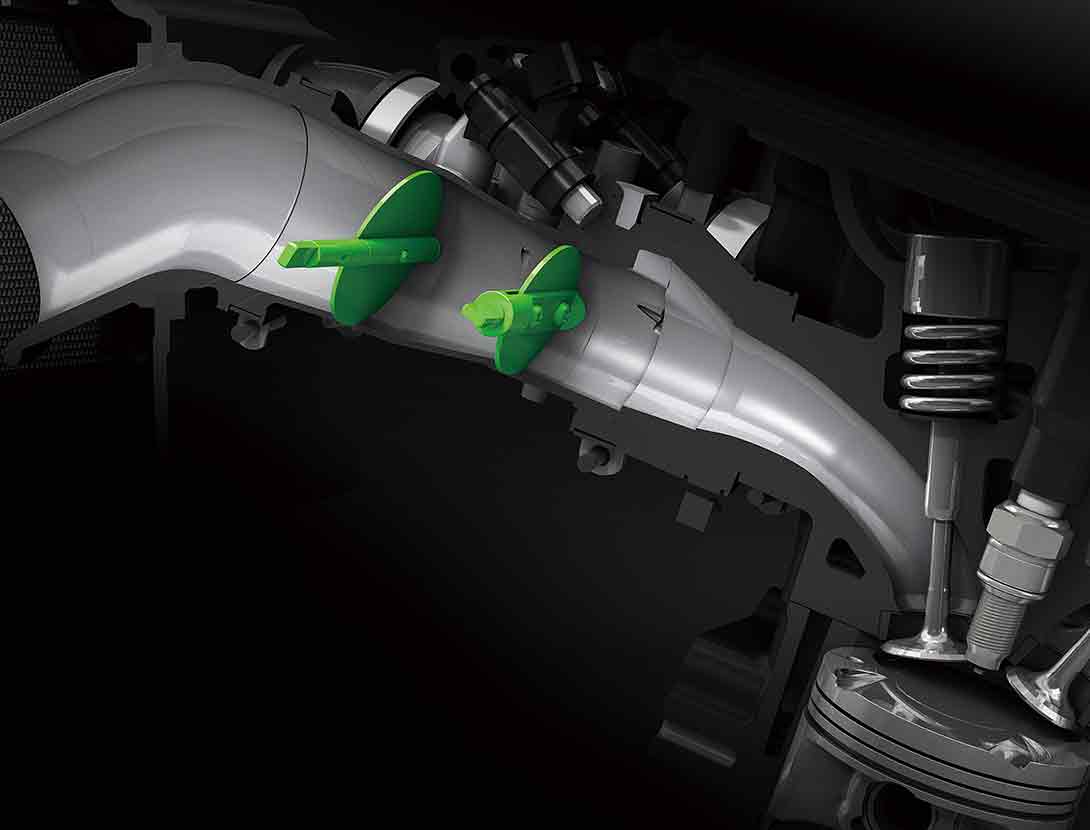
DUAL THROTTLE VALVES
Late-model sport bikes often use large-bore throttle bodies to generate high levels of power. However, with large diameter throttles, when a rider suddenly opens the throttle, the unrestricted torque response can be strong. Dual throttle valve technology was designed to tame engine response while contributing to performance. |
MONOCOQUE FRAMEKawasaki's monocoque frame is a hollow composite of aluminum parts. Originally conceived by Kawasaki engineers, it uses the engine as a fixed member so that chassis rigidity is formed not only by the frame, but the combination of the frame and engine together. Joining the engine and front and rear suspension units, the hollow box-style frame envelops the engine from above. In addition to being made from lightweight materials, its main section also acts as the air cleaner box and battery box, enabling parts to be reduced for even greater weight savings. Further, because the frame does not run beneath or alongside the engine, the chassis can be made very compact. Especially on large-displacement models, the slim chassis design of the aluminum monocoque frame contributes to ease of riding.The aluminum monocoque frame was originally developed by Kawasaki in the 1980s for their World Grand Prix works racer. In an era where steel pipe frames were the norm, the aluminum monocoque frame that debuted on the KR500 took the world by surprise. First featured on a mass-production model on the 2000 Ninja® ZX™-12R, this original Kawasaki technology has evolved and can be found on some of our large-displacement flagship models. |
POWER MODES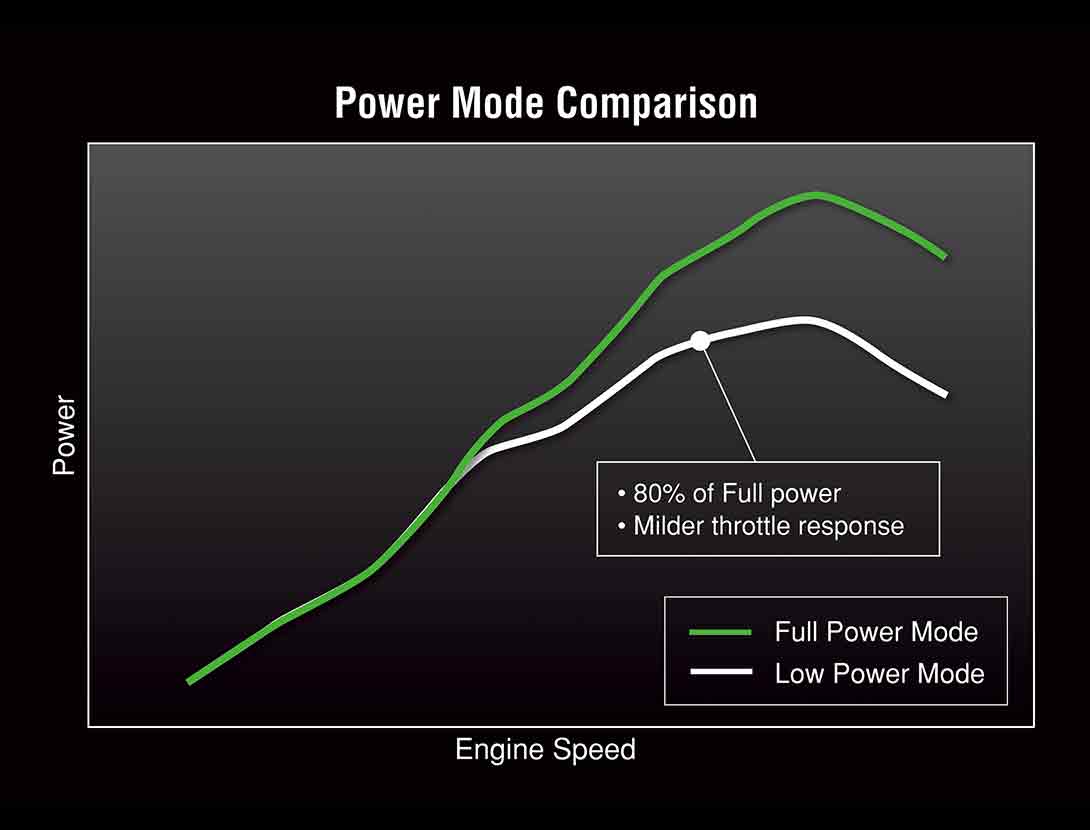 Models equipped with multiple Power Modes offer riders an easily selectable choice of engine power delivery to suit riding conditions or preference. In addition to Full Power mode, one (Low) or two (Middle, Low) alternate mode(s) in which maximum power is limited and throttle response is milder are provided. Models equipped with multiple Power Modes offer riders an easily selectable choice of engine power delivery to suit riding conditions or preference. In addition to Full Power mode, one (Low) or two (Middle, Low) alternate mode(s) in which maximum power is limited and throttle response is milder are provided. |
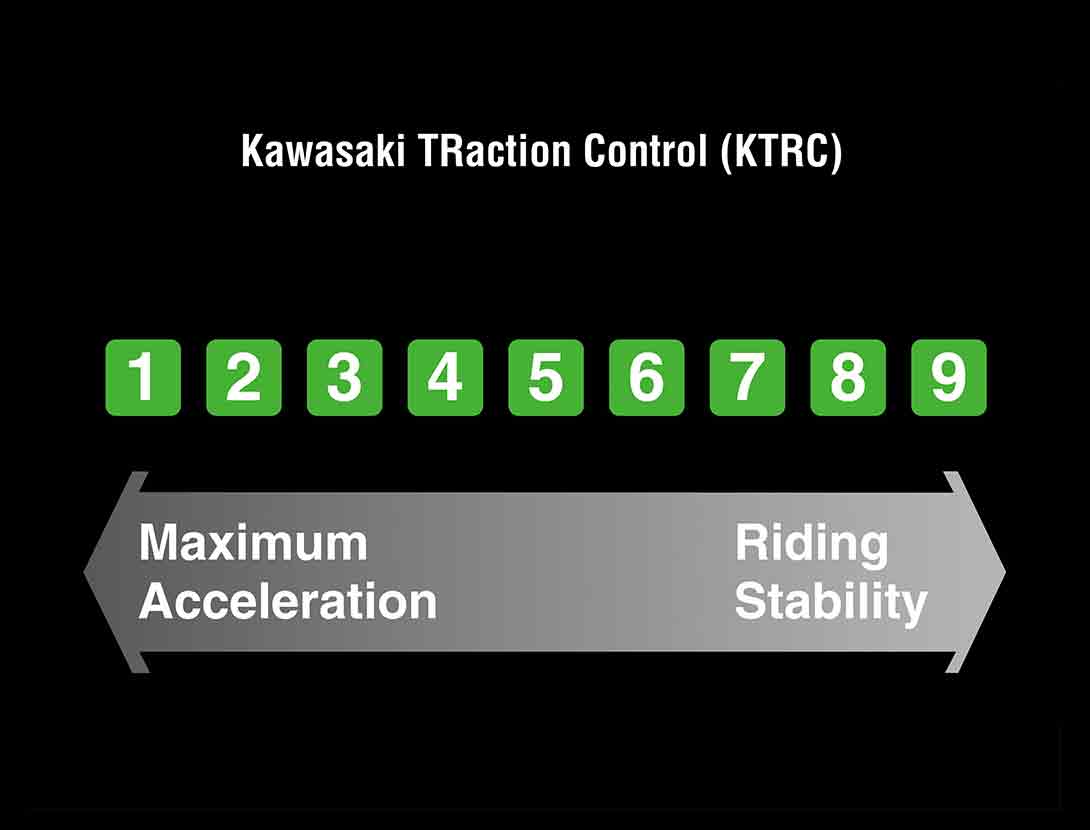
KTRC (KAWASAKI TRACTION CONTROL)
KTRC, Kawasaki's advanced traction control system provides both enhanced sport riding performance and the peace of mind to negotiate slippery surfaces with confidence. Multiple rider-selectable modes (the number of modes varies by model) offer progressively greater levels of intrusion to suit the riding situation and rider preference. |
ABS (ANTI-LOCK BRAKE SYSTEM)Kawasaki ABS systems use front and rear wheel sensors to constantly monitor wheel speed. Should information from either of the sensors indicate that wheel lock has occurred, the ABS ECU directs the pump in the ABS unit to modulate brake fluid pressure (releasing and reapplying pressure so that traction can be regained) until normal operation resumes. ABS offers rider reassurance that contributes to greater riding enjoyment. |
Clutch
Wet multi-disc, manual
Engine
1,441cc, liquid-cooled, 4-stroke, DOHC 16-valve in-line four
Ignition
Digital
Starting
Electric
Final Drive
Chain
Fuel System
Fuel injection: ø44 mm x 4 with dual throttle valves
Lubrication
Forced lubrication, wet sump with oil cooler
Transmission
6-speed, return
Bore X Stroke
84.0 x 65.0 mm
Compression Ratio
12.3:1
Frame
Monocoque, aluminum
Rear Tire
190/50ZR17M/C (73W)
Front Tire
120/70ZR17M/C (58W)
Rear Brake
ø250 mm disc with opposed 2-piston caliper
Front Brake
Dual semi-floating ø310 mm Brembo discs with radial-mount, Brembo M50 monobloc, opposed 4-piston calipers
Rake / Trail
23.0° / 93 mm
Steering Angle (L/R)
31° / 31°
Rear Suspension / Wheel Travel
Bottom-Link Uni Trak, gas-charged shock with compression and rebound damping and spring preload adjustability / 124 mm (4.9 in)
Front Suspension / Wheel Travel
ø43 mm inverted fork with compression and rebound damping and spring preload adjustability, and top-out springs / 117 mm (4.6 in)
Wheelbase
1,480 mm (58.3 in)
Curb Mass**
269 kg (593 lb)
Seat Height
800 mm (31.5 in)
Fuel Capacity
22 litres
Road Clearance
125 mm (4.9 in)
Instrumentation
Analogue-style speedometer and tachometer + multi-function LCD screen with fuel gauge, gear position indicator, odometer, dual trip meters, clock, current and average fuel consumption, remaining range, external air temperature, battery voltage, and Economical Riding Indicator
Dimensions (L X W X H)
2,170 x 770 x 1,170 mm (85.4 x 30.3 x 46.1 in)
TOP FEATURES
POWER
|
PERFORMANCE
|
HANDLING
|
Model
NINJA
Category Name
Motorcycles
Year
2023
Sale Type
New
Manufacturer
Kawasaki
Quantity
0
Color
METALLIC MATTE GRAPHENE STEEL GRAY / FLAT EBONY
Engine Size
1,441cc